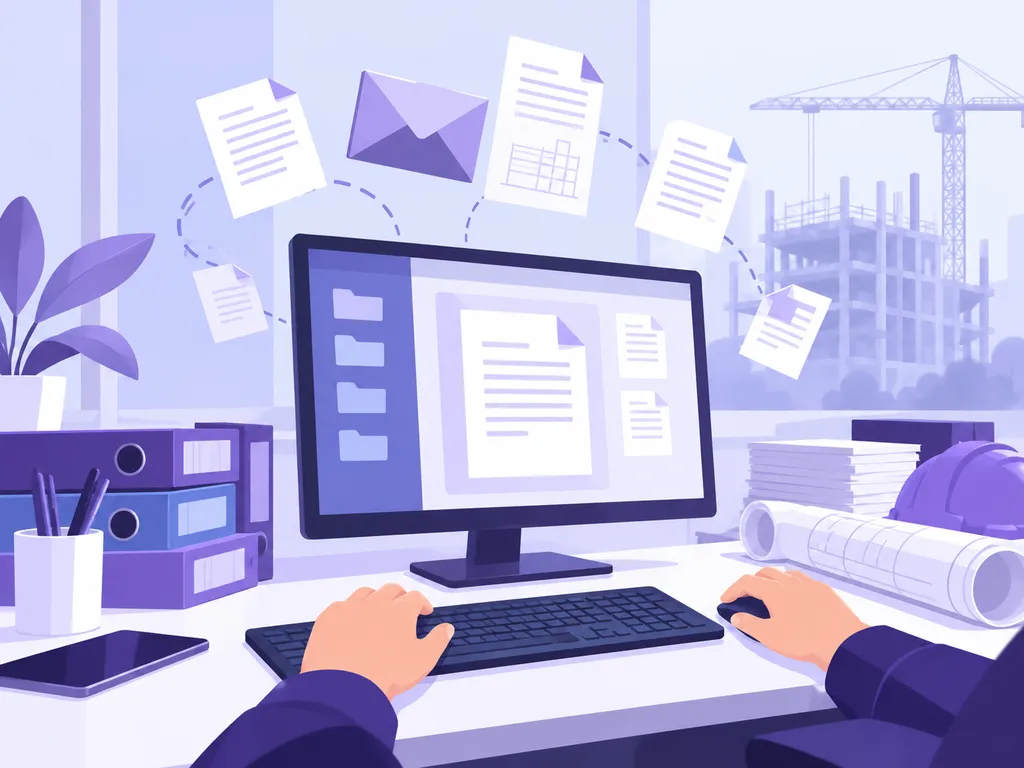
In a construction project, documents pass through the client, the general contractor, subcontractors, the accounting department, and technical specialists. Contracts and estimates define the terms of work, acts confirm completion, and financial documents are linked to settlements. A delay in approval may affect payment and the timing of the next stages.
Electronic document management in a company links documents to a specific site, contract, and stage of work. A document workflow system helps build a route for preparation, review, and signing so that participants can see the task status and the responsible person. The digital format should reflect the actual work process on the site rather than create unnecessary approvals.
Contracts and Estimates: How to Link Documents into a Single Process
Documents are connected from the contract and estimate to the confirmation of completed obligations. The necessary materials are prepared for each stage of work, acceptance is recorded, and information is transferred for settlements. This makes it possible to verify what is stipulated by the contract, what has been completed, and what has been submitted for payment. The following should be included in a unified process:
Contracts with clients, general contractors, and subcontractors.
Estimates, cost calculations, and approved changes.
Work requests and internal orders.
Acts of completed work and acceptance documents.
Invoices, payment documents, and supplementary agreements.
Document accounting in Uzbekistan requires rules for registration, approval, and storage. For each record, the site, contract, responsible person, and date are specified. A document management system preserves links between files when document cards are filled in consistently.
It is necessary to define in advance who verifies the scope and quality of work, who approves the cost, and who confirms the documents on the client’s side. Technical review should not replace financial or legal review. Separation of responsibilities reduces the risk of signing an act without the necessary confirmations or having it returned already at the payment stage.
How to Speed Up Approval Between the Client and Contractors
If several organizations are working on a site, technical and financial review can be carried out in parallel when the stages do not depend on one another. Legal review is organized according to the type of document and the responsibilities of the parties.
Online document approval makes it possible to define the route, deadlines, and performers. To prevent the process from stopping because of a missed email, it is important to define the procedure in advance:
Assign responsible persons for technical, financial, and legal review.
Set deadlines for review and return of documents.
Specify the reasons for rejection and the requirements for corrections.
Configure notifications about a new task and a status change.
Provide substitution for an absent employee.
Electronic document management with counterparties simplifies interaction according to common rules. External participants are given access only to the necessary materials, while viewing, editing, and signing rights are defined separately. The approval history shows the stage of delay, and management can adjust the route if needed.
How Not to Lose Document Versions and the History of Changes
When exchanging files by email and in messengers, participants keep copies with similar names but different content. A contractor may change the estimate while the client is approving the previous version. As a result, the parties rely on different conditions, and clarifying the reason for the discrepancy takes time.
A document archive should store the final file and information about its movement within the established process. An electronic document management program helps record versions, dates of changes, decisions of approvers, and the signing status. It is important to define in advance the rules for storage, naming, and linking materials to sites and contracts.
A structured archive helps restore the course of work and resolve a disputed situation. Documents should be searchable by contract number, site, contractor, and date. Define which versions are retained and who is allowed to make changes. The archive does not отменяет special requirements for form and signing.
Integration of Electronic Document Management with Accounting and Information Systems
Data on contracts, estimates, acts, and payments may be used both in the electronic document management system and in accounting software. Repeated transfer of numbers, amounts, and details increases the risk of errors and creates unnecessary work. Document workflow in 1C and other accounting solutions should be built with regard to the company’s processes and the capabilities of the systems in use.
Before configuration, analyze which information is transferred and in which system it remains current. Document workflow integration should reduce manual entry rather than duplicate employees’ actions. For each exchange, the data source, the responsible person, and the error correction procedure are determined.
A government portal or interdepartmental exchange is used only where it is required by the process. Connection depends on requirements and technical compatibility, so such channels should not be included automatically. The selected solution should comply with the company’s internal standard for working with documents.
Start with one standard process — for example, approval of an act between a contractor, a technical specialist, and the client. After checking the route, recurring actions can be automated and settings can be changed if necessary. Effective electronic document management connects documents at all stages of the project, preserves the history of decisions, and helps move more quickly from work acceptance to settlements. The result depends on clear responsibility, agreed rules, and how well the system matches the actual work of the construction company.